



We value your privacy
We use cookies to enhance your browsing experience, serve personalized ads or content, and analyze
our traffic. By clicking "Accept", you consent to our use of cookies.
What the H8‑5G Smart Helmet Solves in Real Projects
The H8‑5G is designed for organizations that need continuous, hands‑free video and communication from workers in hazardous or hard‑to‑reach areas, such as tunnels, tower tops, substation yards, and behind large machinery.
In ongoing deployments, the H8‑5G addresses three core challenges:
Blind spots in safety supervision – Traditional CCTV and periodic inspections cannot cover every work point. The H8‑5G streams live video from the worker’s helmet, giving command centers a true “frontline view.”
Slow emergency response – When incidents occur, supervisors often lack precise location and situational awareness. With one‑touch SOS, GPS, and optional man‑down alerts, the H8‑5G enables faster dispatch and more informed decision‑making.
Weak documentation for training and compliance – Many high‑risk tasks are not recorded in a usable format. The H8‑5G automatically captures video and location data that can be stored locally or in the cloud for training, incident review, and audit.

H8‑5G Smart Safety Helmet – Key Capabilities
Core technical features of the H8‑5G (as deployed in current projects):
5G‑ready connectivity – Supports 5G/4G LTE, Wi‑Fi, Bluetooth, and GPS for high‑bandwidth, low‑latency video streaming and real‑time location sharing.
Rugged helmet design – Industrial‑grade ABS/PC helmet with IP66 dust and water resistance, suitable for construction, energy, and heavy‑industry environments.
Detachable smart camera module – Quick‑release design allows device sharing without replacing the entire helmet.
Android 12 octa‑core system – MTK octa‑core processor ensures smooth multitasking, live streaming, and on‑device processing.
HD imaging – High‑definition camera with 1080P stabilized video recording and a 120° rotatable lens for flexible viewing angles.
Two‑way audio – Dual/triple microphones and a 2W speaker enable clear communication between field workers and control rooms, even in noisy environments.
Safety functions – One‑touch SOS button, optional man‑down detection, voltage alerts, and GPS tracking for rapid incident response.
Long‑shift battery – Detachable high‑capacity battery (typically 3600mAh) supports full‑day operation;
Flexible storage – On‑device storage (4GB+64GB configurations) plus optional cloud and memory card storage up to 128GB.
These capabilities make the H8‑5G suitable for tunnel construction, tower climbing, building sites, substation inspections, and other scenarios where traditional cameras or smartphones are impractical.
How the H8‑5G Is Being Used On Site
Typical use cases in current deployments include:
Remote expert support – A specialist in the command center sees exactly what the worker sees via 5G live video and guides complex tasks (e.g., electrical switching, equipment alignment) in real time.
Safety inspections and audits – Safety officers remotely “walk” the site through helmet cameras, verifying PPE use, work procedures, and hazard controls without physically visiting every location.
Incident documentation – During near‑misses or incidents, workers activate recording and SOS; video and GPS data are automatically uploaded for investigation and training.
Multi‑site coordination – Command centers manage multiple teams across different sites, switching between live feeds from different H8‑5G helmets to maintain situational awareness.
Integration and Management
How do companies integrate the H8‑5G into existing systems?
A standard H8‑5G deployment includes:
Hardware – H8‑5G smart helmets with detachable camera modules, spare batteries, and charging accessories.
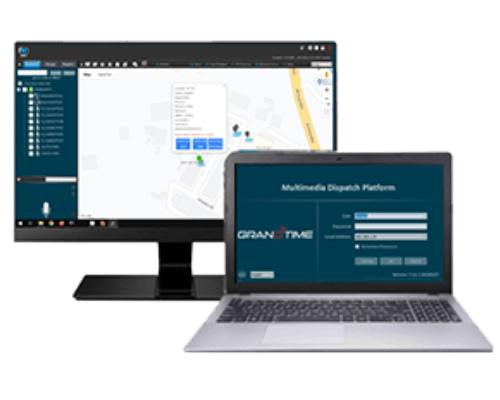
Software – Grandtime multimedia command and dispatch station software for live video walls, group calls, incident alerts, and user/device management.
Network – 5G/4G SIM cards from local operators, with Wi‑Fi fallback where available.
Implementation – Device configuration, network setup, platform integration, and role‑based training for safety managers, supervisors, and frontline workers.
Grandtime supports OEM/ODM customization, including logo branding, firmware adjustments, and integration with third‑party safety, or IoT platforms.
“In live projects, the H8‑5G has become a practical tool for turning ‘invisible’ work points into visible, manageable assets. Safety teams can now see high‑risk tasks as they happen, respond faster when something goes wrong, and build a library of real work footage for training and compliance.”